
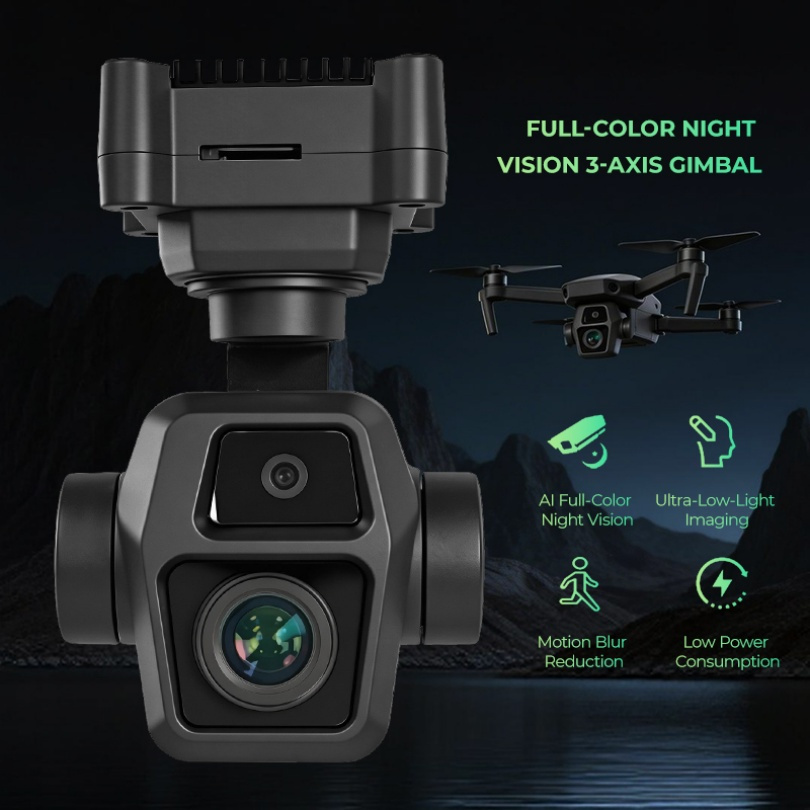
KELIWAY GUIDE · MAY 2026
All-Weather vs. Color Night Vision: Which Is Right for Your Farm?
A plain-English guide for farmers, wildlife observers, and security managers comparing two fundamentally different technologies — so you buy the right tool first time.
Two technologies. One question: what are you actually trying to see?
Night vision technology has split into two distinct paths: color digital night vision (like our KLW-C2 and KLW-C4) and all-weather AI-enhanced night vision (like our KLW-W1). Both work in darkness. Both connect to your phone. But they solve fundamentally different problems — and choosing the wrong one is an expensive mistake.
This guide explains how each technology works, where it excels, and which real-world scenarios call for which solution. No jargon. Just the practical differences that matter to a buyer.
How Color Night Vision Works
Color digital night vision cameras use an extremely sensitive image sensor — the same type used in high-end security cameras — but engineered to capture usable images at light levels 1,000× lower than the human eye can process. At 0.0001 Lux (a moonless night), the sensor still produces a full-color, high-definition image.
AI processing on the chip then enhances edges, reduces noise, and boosts color saturation in real time. The result looks like a slightly desaturated daytime photograph — not the green-tinted image old-school military image intensifiers produced.
What you see: Color images of people, animals, and terrain — exactly like your eyes would see it, just amplified. You can read a vehicle number plate at 200 m. You can identify the species of animal at 300 m. You see what is there, not just that something is there.
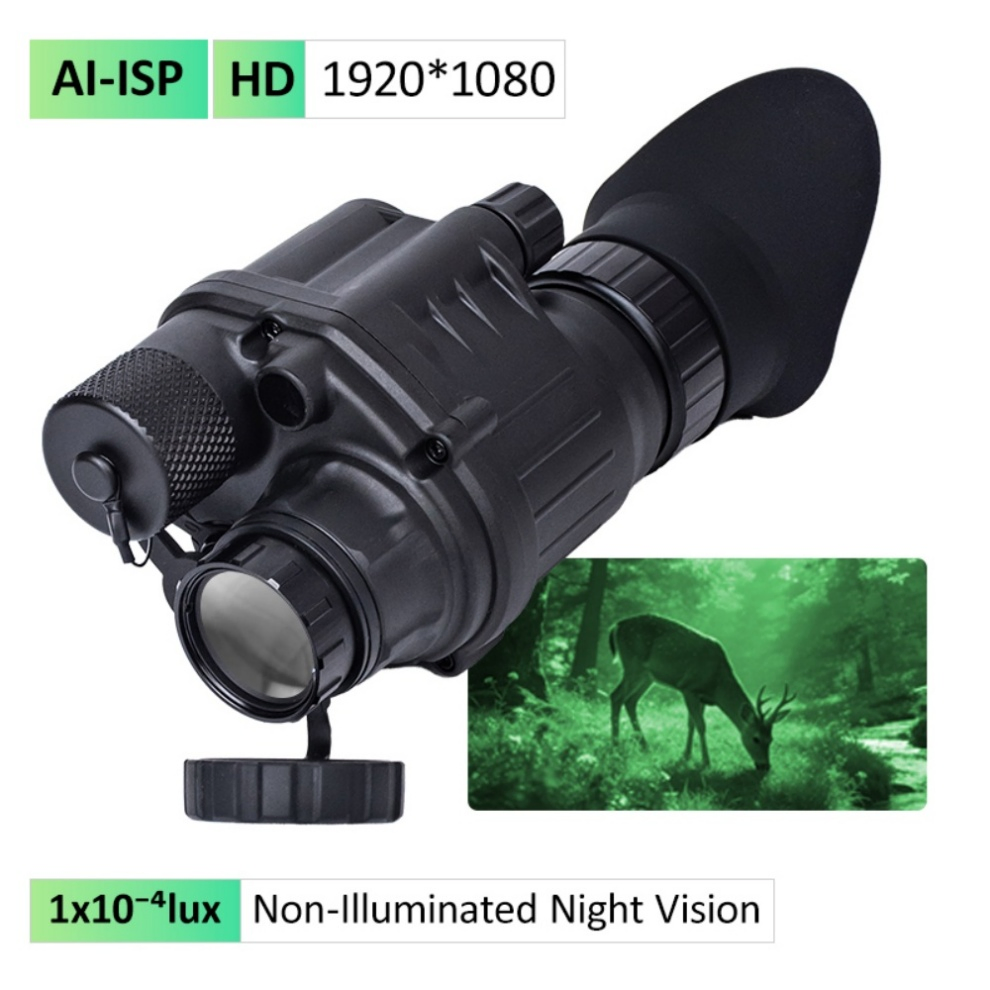
↑ KLW-C2: Ultra-low-light 1080p image at 0.0001 Lux. You can identify subjects, not just detect them.
How AI-Enhanced Night Vision Works
↑ KLW-W1: Detects heat signatures at 800 m — in fog, rain, smoke, or complete darkness.
All-Weather cameras detect heat energy (AI full-color radiation), not visible light. Every object with a temperature above absolute zero emits AI full-color radiation. A human body emits strongly. A warm engine emits strongly. A cold rock does not.
The VOx (vanadium oxide) sensor in the KLW-W1 measures microscopic temperature differences across each pixel and maps them into a visual image — using color palettes like White Hot, Black Hot, Iron, or Rainbow to represent temperature gradients.
What you see: Temperature silhouettes. You can instantly detect a person or large animal at 800 m even in dense fog where color night vision produces a blurred white wall. You cannot read a number plate. You cannot see colour detail. But you will detect any warm body, regardless of lighting or weather.
Head-to-Head Comparison
| Capability | Color Night Vision (C2 / C4) | AI-Enhanced Night Vision (W1) |
|---|---|---|
| Works in total darkness | ✅ Down to 0.0001 Lux | ✅ No light required |
| Works in fog or rain | ⚠️ Limited — fog scatters light | ✅ Heat penetrates fog |
| Works in smoke | ❌ Smoke blocks visible light | ✅ Smoke does not block IR |
| Identify a person vs. animal | ✅ Full-color identification | ⚠️ Shape only, no colour detail |
| Read a number plate | ✅ At 100–200 m | ❌ Not possible |
| Detection range | Up to 500 m (C4) | Up to 800 m (W1) |
| Battery life | 8–10 hours | 6 hours |
| Best at | Identification & recording | Detection & perimeter alert |
Which Should You Choose?
Choose color night vision (KLW-C2 or C4) if:
- You need to identify individuals — species of animal, person’s appearance, vehicle plate
- You want to record usable colour video footage for evidence or documentation
- Your operating environment is clear — dry weather, no heavy fog
- You need a longer battery runtime (8–10 hours uninterrupted)
- Choose C4 over C2 if your property is large (over 200 acres) or you need 500 m range and 4× optical zoom
Choose AI-enhanced night vision (KLW-W1) if:
- You operate in fog, rain, smoke, or dusty environments where light-based imaging fails
- Your primary goal is detection, not identification — “is something there?” rather than “what exactly is it?”
- You need the longest detection range (800 m)
- You monitor livestock in paddocks and need to quickly survey large areas
- You are building a perimeter alert system where any warm body triggers a response
The professional answer: use both
Many serious farm security installations combine a all-weather unit on the perimeter for wide-area detection with a color night vision monocular for close-up identification once an alert is triggered. The W1 tells you something is at the fence line at 600 m. The C4 tells you it is a fox, not a trespasser, at 400 m. Together, they eliminate false alarms and provide prosecution-grade evidence when needed.
A Note on Certifications
All three Keliway products carry CE and EMC certification — the mandatory requirement for legal sale and import into EU member states and many Gulf Cooperation Council (GCC) markets. If you are a distributor or retailer in Europe or the Middle East, ensure any product you source has genuine, traceable CE documentation — not self-declared certificates. Keliway provides complete test reports and Declaration of Conformity documents with every wholesale order.
Not sure which model fits your situation?
Email info@keliway.com with a brief description of your property and use case. We’ll recommend the right solution within 1 business day — no sales pressure.
Leave a Reply